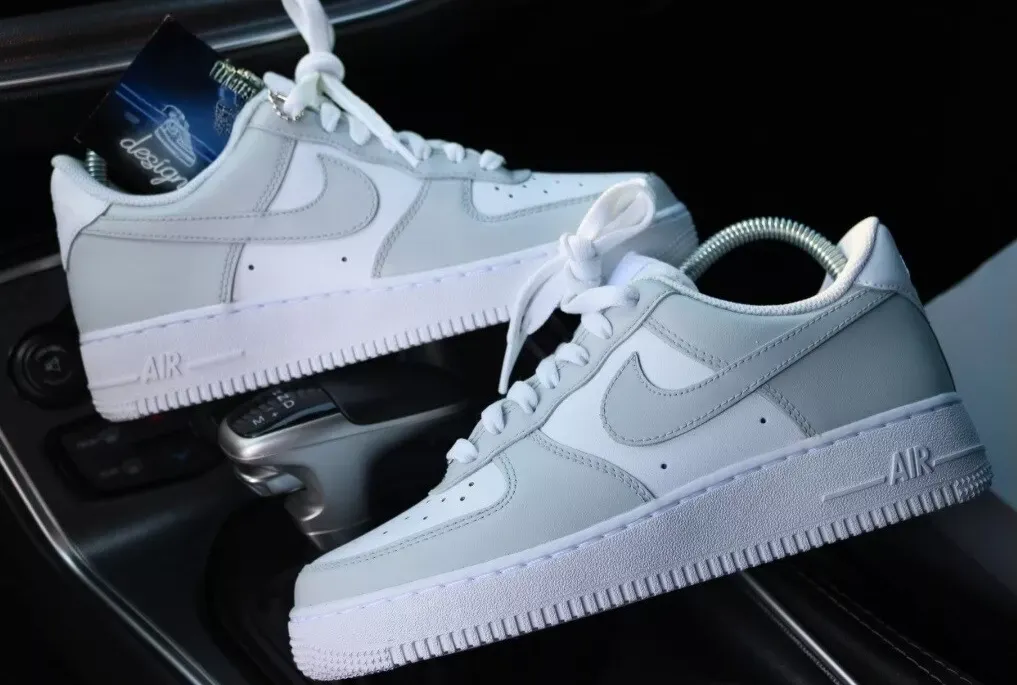
Every person who gets a custom pair asks the same questions before and after: Will the paint crack? How do I clean them without ruining the design? What's going to happen the first time they get rained on? These are the right questions, and they deserve real answers from the people who actually paint the shoes.
I've painted over 2,400 pairs since 2017. The pairs I see hold up over years are the ones whose owners understood what the paint is, what protects it, and what destroys it. This guide gives you everything we tell our own customers — not a generic "wipe with a cloth" article, but the actual protocol we follow and recommend.
1. What Custom Paint Is — and What Protects It
Professional custom shoes use leather acrylic paint — a paint specifically formulated to flex with leather rather than crack. The industry standard is Angelus leather acrylic. It's the same paint used by professional custom artists, major sneaker brands for limited editions, and restoration specialists. It is not house paint. It is not craft store acrylic. Those crack. Leather acrylic does not.
The paint itself, once fully cured (48–72 hours after application), bonds to the leather surface and does not come off from normal wear. What sits on top of the paint is the finisher — a flexible sealant applied in multiple thin coats that creates the protective layer between your shoe's paint and the world. The finisher is what determines the surface sheen (matte, satin, or gloss) and what you're actually cleaning when you care for the shoe.
When you clean a custom painted shoe, you are cleaning the finisher layer, not the paint itself. The paint is underneath, bonded to the leather. Gentle cleaning maintains the finisher. Harsh cleaning strips the finisher, which then exposes the paint to direct contact and wear. Protect the finisher and you protect the paint indefinitely.
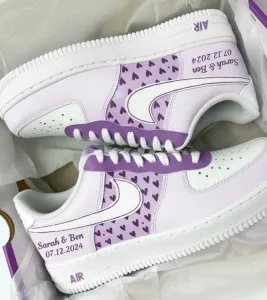
2. How to Clean Custom Painted Sneakers — Step by Step
This is the cleaning method we use in the studio and recommend to every customer. It takes about 10–15 minutes and protects the finisher while removing dirt effectively.
Remove loose dirt first
Tap the soles together and use a dry, soft-bristle brush — a dedicated sneaker brush or clean toothbrush works — to sweep away any dry, loose dirt from the upper. Do this before adding any moisture. Rubbing dry grit across the finisher scratches the surface and dulls the finish over time.
Mix a mild cleaning solution
Add a small drop of mild dish soap — a pea-sized amount — or a dedicated sneaker cleaner (Jason Markk or Crep Protect work well) to a bowl of cool water. Temperature matters: hot water softens the finisher layer and can cause it to become tacky or peel at paint edges. Always cool.
Dampen your brush or cloth
Dip a soft-bristle brush or microfiber cloth into the solution and wring out the excess. You want the brush damp, not dripping. Excess moisture sitting on the leather surface — particularly at the edges where paint meets unpainted leather — can lift the paint over time with repeated exposure.
Clean in small, gentle circles
Work on one section at a time using small circular motions with light-to-moderate pressure. You are not scrubbing — you are lifting dirt from the finisher surface. Hard scrubbing abrades the finisher and dulls the sheen. Work systematically across the upper, one panel at a time.
Wipe clean with a damp cloth
Use a clean damp cloth (no soap) to wipe away any soap residue from each section as you go. Leaving soap residue to dry on the finisher creates a haze that becomes harder to remove over time. Rinse the cloth frequently.
Pat dry — never rub
Use a clean, dry microfiber cloth or paper towel to pat each section dry immediately after wiping. Patting, not rubbing. Rubbing generates friction that creates heat and can slightly abrade the finisher, especially on gloss finishes where surface marks show more readily.
Air dry completely before storing
Allow the shoe to air dry fully at room temperature — ideally with a shoe tree inside to maintain shape — before boxing or storing. Keep away from heat vents, radiators, and direct sunlight during drying. Never use a hair dryer or clothes dryer. Heat is the finisher's primary enemy.
The rubber midsole (the white bottom edge) can be cleaned with slightly more pressure and a Magic Eraser (melamine foam). Keep the Magic Eraser on the rubber only — do not let it contact the leather upper or the painted surface. The abrasive properties that make it effective on rubber will damage the finisher on leather.
3. What to NEVER Do to Custom Painted Shoes
These are the mistakes we see most often. Every one of them damages either the paint, the finisher, or both. Most are irreversible without a professional refinish.
The washing machine is the single fastest way to destroy a custom pair. The mechanical agitation lifts the finisher at design edges, the heat of the water softens and distorts the paint layer, and standard laundry detergent contains surfactants that strip leather finishes. The tumble dryer compounds all of these. There is no gentle cycle gentle enough for custom painted leather.
Acetone dissolves leather acrylic. A single application will strip paint down to the bare leather. Even rubbing alcohol (isopropyl) in high concentrations can damage the finisher. If you need to remove a small scuff or mark from the rubber sole, use a dedicated rubber eraser — not any solvent-based product.
UV radiation fades leather acrylic paint over time. A pair left in a sunny window or car dashboard for hours will show visible color shift — particularly whites yellowing, reds fading to orange, and blues shifting. Store away from windows. Brief sun exposure (wearing the shoes outdoors) is fine; sustained UV is not.
- Bleach or bleach-containing cleaning products
- Petroleum-based cleaners (WD-40, lighter fluid)
- Harsh all-purpose sprays (Windex, 409)
- Saddle soap — designed to condition and slightly strip leather, which can affect the finisher's bond
- Suede erasers or suede cleaner on painted leather
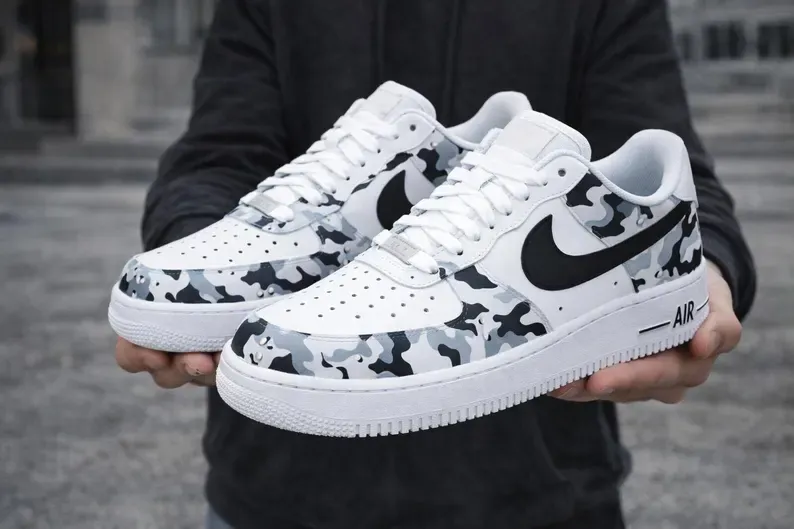
4. Does Custom Paint Crack? The Honest Answer
The short answer: professional leather acrylic applied correctly does not crack under normal wear. The longer answer explains why some custom shoes crack and some don't.
| Condition | Does it crack? | Explanation |
|---|---|---|
| Professional leather acrylic + finisher, proper care | No | Formulated to flex with leather. Won't crack under normal wear even in high-flex areas like the toe box. |
| Professional paint, poorly applied (thick coats) | Eventually | Thick application creates a rigid paint layer that cracks as the shoe flexes. Thin coats are always the professional approach. |
| Craft store acrylic without flexible medium | Yes — quickly | Standard acrylic dries rigid. On a leather surface that flexes with every step, it cracks at flex points within weeks of wear. |
| House paint or enamel | Yes — very quickly | No flexibility whatsoever. Will crack and peel within days of wear, particularly at the toe box fold. |
| Professional paint, machine washed | Yes | The machine wash process causes cracking and delamination regardless of paint quality. |
All StyleReels custom shoes use Angelus leather acrylic with flexible finisher, applied in multiple thin coats. This is the professional standard specifically because it flexes with the shoe rather than cracking. When customers report cracking in custom shoes they've bought elsewhere, it's almost always craft store acrylic or house paint applied without a flexible medium.
5. How Long Do Custom Painted Shoes Last?
With proper care, professional custom painted shoes last 3–5 years of regular wear — daily or near-daily use — before showing significant wear on the finisher layer. The paint itself is typically fine far beyond this point; it's the finisher that shows wear first, which manifests as a dulling of the surface sheen rather than any paint damage.
For occasional wear (a few times per month, or reserved for events), professionally custom painted shoes last significantly longer — 8–10 years without notable wear to the finisher. The limiting factor is UV exposure from storage conditions, not use. A pair worn rarely but stored near a window will show more wear than a pair worn often but stored properly.
6. Pre-Care — What to Do Before the First Wear
The most important care step happens before you ever put the shoes on. Apply a water-repellent spray to the upper before first wear. This adds an outer protection layer on top of the finisher that repels moisture, reduces absorption of surface dirt, and makes subsequent cleaning easier.
- Use a spray specifically designed for leather and sneakers — Crep Protect or Jason Markk Repel are widely available and effective.
- Hold the can 6–8 inches from the shoe and apply a light, even coat across the entire upper.
- Let dry completely (15–20 minutes) before wearing. Apply a second light coat for extra protection.
- Re-apply every 2–3 months of regular wear or after each cleaning session.
7. How to Store Custom Painted Sneakers
- Use the original box or a ventilated shoe box — not a sealed airtight container. Airtight storage traps moisture and can cause yellowing of the leather over time.
- Insert a cedar shoe tree or acid-free tissue paper to maintain the toe shape and absorb any residual moisture.
- Store away from direct sunlight — even through a window. UV exposure yellows white leather and fades paint colors over time. A closet or shelf away from windows is ideal.
- Do not stack other shoes on top — the pressure can create permanent indentations on painted surfaces or cause scuffing where the shoes contact each other.
- If storing long-term (several months), wrap each shoe loosely in acid-free tissue paper before boxing. This prevents scuffing from contact with the box lining and wicks any moisture.
Ready to Order Your Custom Pair?
Free digital mock-up in 48–72 hours — see the exact design before any painting or payment. Sealed with professional finisher. Starting at $299.
Request Free Mock-Up → How It WorksFrequently Asked Questions