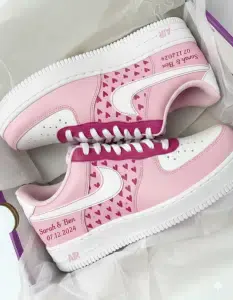
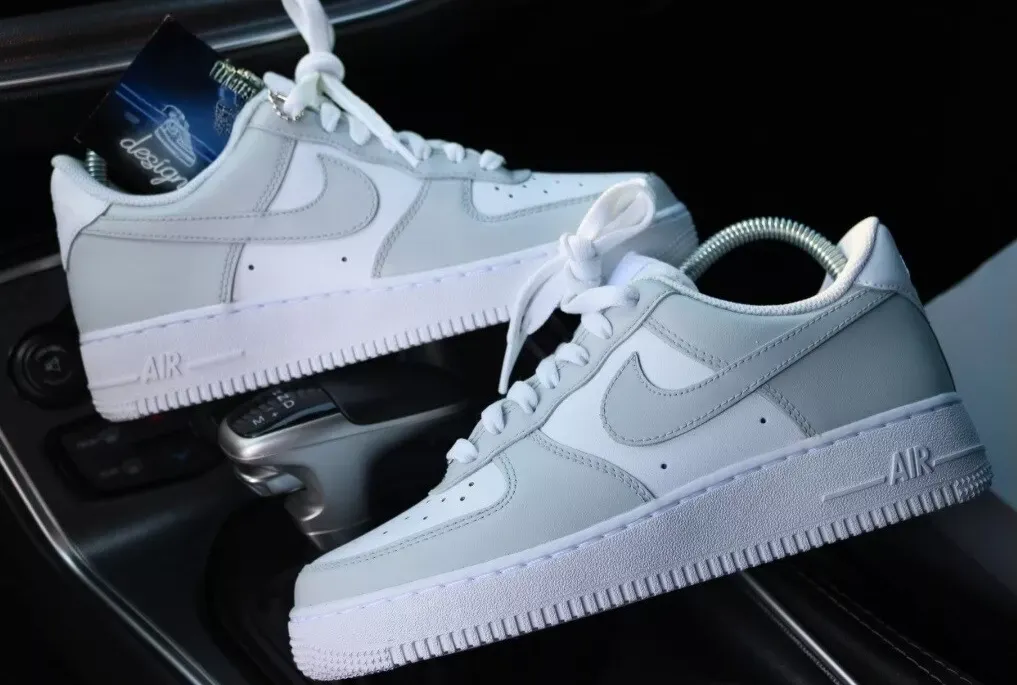
How Vinyl Custom Shoes Are Made
Vinyl custom sneakers use heat-transfer vinyl (HTV) or adhesive vinyl. A design is cut from vinyl sheet material — either by hand or using a computerized cutting machine (Cricut, Silhouette) — and then applied to the shoe surface using heat and pressure.
The vinyl sits on top of the leather as a separate material layer. It does not penetrate the leather. It is adhered to the surface the same way a vinyl car wrap adheres to a car's paint — through heat-activated adhesive, not chemical bonding to the substrate material.
The advantage of vinyl: it's fast. An experienced vinyl artist can apply a complex design in 1–2 hours. It can reproduce very fine printed detail that would be technically difficult to achieve with a brush. It's cheaper to produce because it requires less skilled labor time.
The disadvantage: the shoe's leather flexes thousands of times per day. The vinyl layer is a different material with different flex characteristics than leather. That mechanical mismatch is the root cause of every durability problem with vinyl custom shoes.
How Hand-Painted Custom Shoes Are Made
Professional hand-painted custom shoes start with surface preparation. The factory finish on new leather — a protective coating applied by the shoe manufacturer — must be removed so paint can bond to the leather rather than to the factory coating. Professional artists use Angelus Leather Preparer & Deglazer, which opens the leather surface for maximum paint adhesion.
Angelus Brand leather acrylic paint is then applied in multiple thin layers using brushes and airbrush. Leather acrylic is formulated specifically for flexible surfaces — it remains pliable after drying rather than becoming brittle like regular acrylic. Each color layer dries before the next is applied. Complex designs with shading, blending, and fine detail require 8–20+ hours of artist work time.
The 5-Step Professional Hand-Painting Process
After sealing, the paint is no longer just sitting on the leather — it has bonded to the leather surface and is protected by multiple finisher coats. The sealed pair can be wiped clean, exposed to light rain, and worn through normal activity without damage to the design.
Hand Painted vs Vinyl — Full Comparison
| Factor | Hand-Painted (Leather Acrylic) | Vinyl / HTV |
|---|---|---|
| Bonding method | Bonds to leather fiber (chemical) | Adheres to surface (adhesive) |
| Flex durability | Flexes with leather indefinitely | Lifts at flex points over time |
| Peeling risk | None when properly sealed | Moderate to high at edges |
| Color depth | Deep, layered, artist-applied | Flat, single-layer film |
| Design complexity | Unlimited — full original art | Limited to cut shapes & silhouettes |
| Fine photographic detail | Difficult below 3mm | Excellent for very fine text/logos |
| Production time | 8–20+ hours per pair | 1–4 hours per pair |
| Price | $299+ (reflects artist time) | $80–$180 typical |
| Wearability (years) | 3–5+ years regular wear | 6–18 months before visible wear |
| Water resistance | Good (when sealed) | Poor (edges lift when wet) |
| Heat tolerance | Stable at normal temperatures | Can lift in hot cars/direct sun |
| Appropriate for leather | Yes — formulated for leather | No — designed for flat surfaces |
The Durability Gap — Why Vinyl Peels on Leather Shoes
A shoe's leather upper flexes at every step. The toe box creases when you walk. The side panels near the sole flex laterally when you turn. The ankle collar creases when you bend down. On a pair of regularly-worn shoes, each of these flex points moves thousands of times per week.
Vinyl is a polymer film. Leather is an organic material. They flex differently. With repeated flexing, the adhesive bond between the vinyl film and the leather surface fatigues — starting at the edges where the vinyl meets exposed leather. Once an edge begins to lift, moisture and debris work under the vinyl accelerating the process.
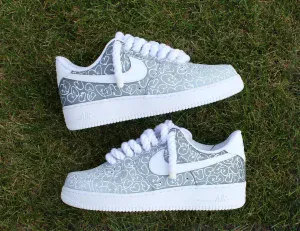
Hand-painted leather acrylic doesn't peel because it isn't a separate material layer adhered to the top of the leather. After deglazing and proper application, leather acrylic has bonded into the leather surface. The finisher coats create a flexible protective layer that moves with the leather. There is no edge to lift — the paint is part of the surface, not attached to it.
⚠️ Red flag: If a custom shoe seller advertises "premium vinyl" or "professional HTV" as a feature, that's a signal the shoes will peel. Vinyl is never the right material for leather footwear regardless of its quality. A professional hand-painting artist will never describe their process using vinyl terminology.
Color Depth and Visual Quality
Vinyl produces a flat, single-layer color. What you see is the surface of the vinyl film — one color value across the shape, with hard edges where the vinyl was cut. It has the visual quality of a sticker because it effectively is one.
Hand-painted leather acrylic has depth because it is applied in multiple layers. A red swoosh hand-painted by a professional artist has been layered, blended, shaded at the edges, and built up to the right opacity and tone. The result has dimensionality that a vinyl equivalent cannot replicate.
This difference is most visible in person and in detailed photography. At distance, a clean vinyl application can look similar to hand-painting. At close range — especially in photographs taken for events like weddings — the difference in color quality and depth is immediately apparent.
How to Tell Which Method You're Getting
Before ordering from any custom shoe seller, ask these questions directly:
- "Do you hand-paint with leather acrylic or use vinyl?" — A legitimate hand-painting artist answers immediately and specifically.
- "What paint brand do you use?" — Angelus is the professional industry standard. An artist who can't name their paint brand is a red flag.
- "Do you deglaze before painting?" — Proper preparation is the foundation of lasting adhesion. An artist who doesn't know what deglazing is hasn't been trained in professional hand-painting technique.
- "How many sealant coats do you apply?" — Professional artists apply 3–5 coats of finisher. One coat is inadequate protection.
Turnaround time as a tell: A credible hand-painted custom shoe takes 8–20+ hours of artist time, plus 24–48 hours of cure time before sealing. Any seller offering 24–48 hour turnaround on a complex custom design is almost certainly using vinyl. StyleReels' standard production window is 2–4 weeks — that timeline reflects actual painting and curing time, not a logistics delay.
When Vinyl Actually Makes Sense
Vinyl is not universally wrong — it's wrong for leather footwear specifically. There are legitimate use cases where vinyl is appropriate:
- Canvas sneakers (Vans, Converse canvas) — less aggressive flexing than leather, vinyl holds better on canvas than on leather
- Very fine logo detail — logos with sub-3mm text that a brush genuinely can't replicate cleanly; a skilled artist can apply a vinyl element for fine text within an otherwise hand-painted design
- Display-only shoes — shoes that will be framed or displayed, never worn; durability is irrelevant for display pieces
- Budget projects where the buyer understands the tradeoffs and expects the shoe to last 6–12 months of light wear
For wearable custom shoes intended to last — especially leather AF1s, Jordan 1s, and wedding shoes — hand-painting with leather acrylic is the only professionally appropriate method.
StyleReels uses Angelus leather acrylic on every pair — properly deglazed, fully sealed, designed to wear for years. See the hand-painted difference in the gallery or start your free design request.
View Hand-Painted Gallery → Get a Free Mock-Up